Double Dragon
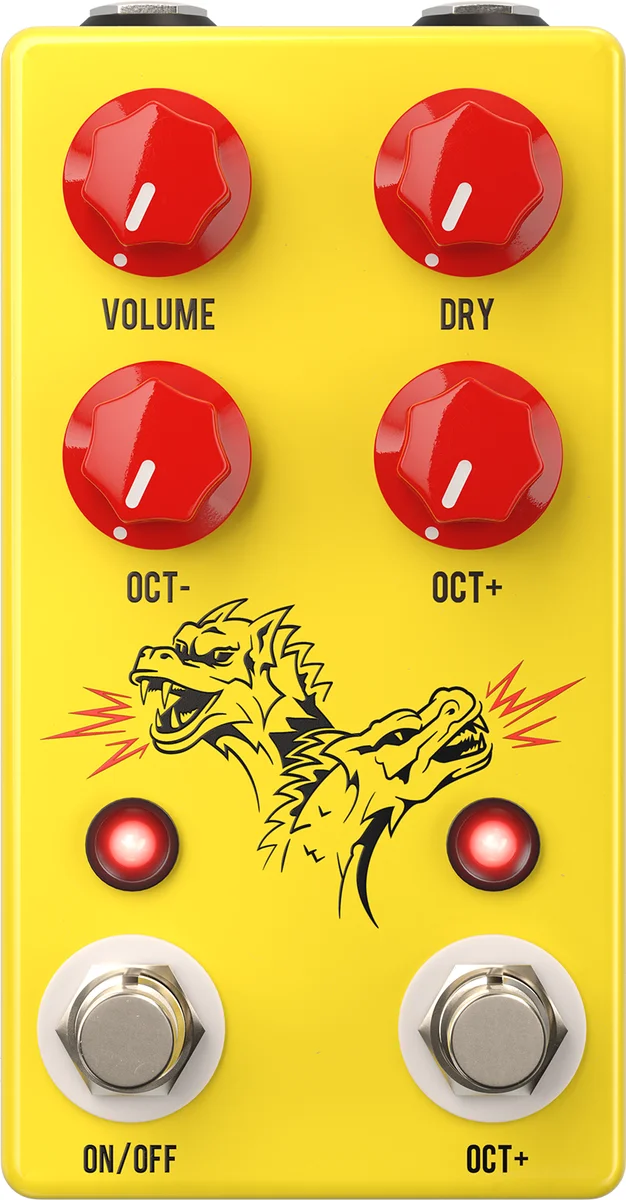
Octave dividers have a gnarly, gloriously unreliable charm, and JHS leaned straight into it with Double Dragon, a lo-fi, monophonic, fully analog pedal that stacks two octaves into one growling distortion. It uses the same kind of octave-division technology that powered classics like the MXR Blue Box, the Boss OC-2 and the Electro-Harmonix Micro-Synth, rather than the pitch-shifting DSP behind most modern octavers. Tracking is not meant to be flawless, and that is the point. Each octave gets its own level knob, so you build the sound from the bottom up. The lower octave supplies the foundation, while the upper one, which lands somewhere between an Octavia and a Superfuzz, adds the snarl. A master volume sets overall output and a dry knob blends the untouched guitar back in, which keeps note attack on top of the fuzz. Two footswitches split the duties: the left one turns the whole pedal on and off, and the right one toggles the upper octave, so you can drop from a thick two-octave roar to a sub-heavy single layer mid-song. Single notes get fattened into something enormous, while chords turn unpredictable and spluttery. A mid-focused overdrive such as a Tube Screamer in front tightens things up, a fuzz after it pushes toward synth-flavoured mayhem, and pitch vibrato nudges it toward analog synth territory. It runs on standard 9V, has silent buffered bypass and top-mounted jacks for tidy boards, and works on bass too. It sits at the raw, characterful end of octave pedals.


