Big Muff Pi
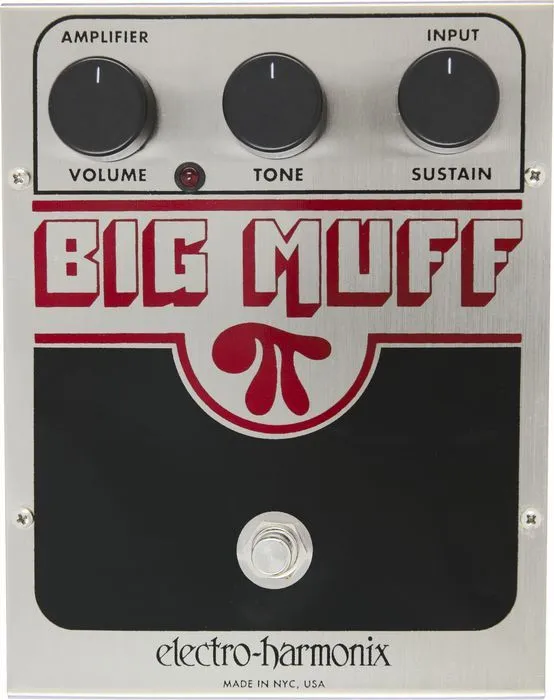
The Electro-Harmonix Big Muff π is a true icon among fuzz pedals, renowned for its thick, sustaining tone that has defined the sound of rock, metal, shoegaze, and experimental music for decades. Introduced in the late 1960s, the Big Muff pioneered a unique four-transistor circuit design that delivered a smoother, more violin-like sustain compared to earlier fuzz units. Its signature tone - huge low end, scooped mids, and singing sustain - became a hallmark for countless guitarists and bassists, from Jimi Hendrix and Carlos Santana to David Gilmour and Billy Corgan. Over its storied history, the Big Muff went through multiple revisions, each with subtle circuit, component, and cosmetic changes that impacted its sound and collectability. The early "Triangle" version had a slightly brighter, more articulate high end, while the "Ram's Head" model offered a smoother, fatter low end. The op-amp-based "IC" version delivered a more aggressive, cutting tone, before the four-transistor design returned in the "Block Logo" and "Red/Black" models, known for their heavy, saturated tones. Whether you're after the open, organic fuzz of the original or the snarling distortion of later variants, the Big Muff's iconic status is undeniable. Its ability to conjure a "wall of sound" has made it an indispensable tool for generations of guitarists, cementing its place as one of the most influential and sought-after pedals in music history.